Business Networking in Dubai: How to Turn Connections Into Referrals
Sep 26, 2026You attend a business networking event in Dubai.
You meet 25 people.
You exchange business cards.
You scan a few QR codes.
You connect with everyone on LinkedIn.
You go home with a phone full of new contacts.
Three weeks later?
Nothing.
No referrals.
No meetings.
No collaborations.
No business.
And eventually, you start thinking:
“Networking events don't really work for my business.”
But sometimes the problem isn't the networking event.
It's what happens before, during and especially after it.
For founders and SME owners, networking can become a powerful business-development channel. But only when we stop measuring success by the number of people we meet and start thinking about the quality of relationships we build.
Because 100 business cards aren't a network.
And one good relationship can sometimes be worth more than all 100.
First: Stop Going to Networking Events Just to “Get Clients”
Of course you want clients.
Every business needs revenue.
But walking into a room thinking:
Who here can buy from me?
can make networking unnecessarily difficult.
The person standing in front of you may never become your customer.
But perhaps they know five people who could.
Or perhaps they could become your:
- Referral partner
- Supplier
- Collaborator
- Strategic partner
- Industry contact
- Corporate connection
- Source of information
- Future customer
This is where founders often underestimate networking.
The value of a connection isn't limited to what that person can buy from you today.
Before the Event: Know What You're Looking For
Before attending your next networking event, answer one question:
What does my business need right now?
Not:
“More business.”
Be specific.
Perhaps you need:
- Introductions to corporate HR departments
- Hospitality clients
- Retail partners
- Construction-sector contacts
- A reliable supplier
- Referral partners
- An accountant
- A distributor
- Corporate procurement connections
- Collaborators for an upcoming project
- Knowledge about entering a new market
- Visibility within a particular industry
Once you know what you're looking for, your conversations become much more intentional.
Instead of randomly meeting 30 people, you can focus on finding five relevant relationships.
Make Yourself Easy to Refer
Imagine meeting someone at an event who says:
“I do consulting.”
What kind of consulting?
For whom?
What problem do they solve?
Who should you introduce them to?
You probably don't know.
Now compare that with:
“We help UAE SMEs build HR systems when they're growing but aren't ready for a full-time HR department.”
Immediately, you can picture the customer.
Or:
“We provide corporate gifting for companies with teams of 100+ employees.”
Or:
“We help restaurants and clinics generate customer enquiries through Google and Meta advertising.”
The clearer your positioning is, the easier it becomes for someone else to remember and refer you.
Before attending an event, try completing this sentence:
“We help _________ to _________.”
If your answer requires five minutes of explanation, simplify it.
Your 30-Second Introduction Isn't Supposed to Tell Your Entire Life Story
A common networking mistake is trying to explain everything the company does in the first conversation.
You don't need to.
Your introduction has one job:
Give the other person enough information to decide whether they want to know more.
Instead of listing 14 services, focus on:
Who you help + what problem you solve + what makes the conversation relevant.
Then stop talking.
Let the conversation develop naturally.
Ask Better Questions
Many networking conversations follow the same pattern:
“What do you do?”
“Where are you based?”
“How long have you been in Dubai?”
And then both people move on.
Try questions that reveal more about the business.
For example:
“What type of clients are you trying to work with this year?”
“What's currently your biggest growth challenge?”
“Do most of your customers come through referrals or marketing?”
“Are you mainly B2B or B2C?”
“Which industries are you trying to enter?”
“What kind of introduction would actually be useful for you?”
Now you're learning something.
And once you understand what someone needs, you may realise:
I know exactly who this person should meet.
That's where networking starts becoming useful.
The Person You Meet Doesn't Need to Be Your Customer
This is one of the most important networking principles for founders.
Imagine you're an interior designer.
At an event, you meet an HR consultant.
At first glance, there is no opportunity.
The HR consultant doesn't need an interior designer.
You don't need an HR consultant.
So both of you move on.
But what if that HR consultant regularly works with companies that are:
- Expanding
- Opening new offices
- Relocating
- Hiring rapidly
Those companies may eventually need office design or fit-out services.
Suddenly, the HR consultant becomes a potentially valuable referral partner.
This is why the question isn't always:
“Can this person buy from me?”
Sometimes the better question is:
“Do we operate around the same customers?”
Build a Referral Map Before Your Next Event
This is a simple exercise that every founder should try.
Write your ideal customer in the middle of a page.
Then ask:
Which other businesses already serve this customer?
For example, suppose you sell services to SMEs.
Your referral ecosystem might include:
Business setup consultants
↓
Accountants
↓
HR consultants
↓
Marketing agencies
↓
Business coaches
↓
Insurance advisers
↓
IT providers
↓
Corporate lawyers
None necessarily competes directly with the others.
But they may serve many of the same customers.
Or imagine your business serves the construction and real-estate sector.
Your ecosystem might include:
Architect
↓
Interior designer
↓
Fit-out contractor
↓
Quantity surveyor
↓
Furniture supplier
↓
Signage company
↓
Property consultant
↓
Facilities-management provider
Now you're no longer networking randomly.
You're deliberately building an ecosystem around your customer.
Give Referrals Before Asking for Them
One of the quickest ways to build a strong professional relationship is to be useful.
Suppose someone tells you:
“We're currently looking for someone who handles corporate photography.”
And you know a good photographer.
Make the introduction.
Don't immediately ask:
“What can you do for me?”
Good business relationships often develop through repeated exchanges of value.
An introduction.
A recommendation.
Useful information.
An invitation.
An opportunity.
Eventually, people begin to remember:
“This is someone who connects people.”
That reputation has considerable value.
But Don't Make Random Introductions Either
There's another side to this.
Not every introduction is useful.
Before connecting two people, ask yourself:
Is there a genuine reason these people should speak?
And ideally ask both sides first.
For example:
“I met someone yesterday who specialises in corporate wellness programmes. You mentioned you're reviewing employee wellbeing initiatives. Would an introduction be useful?”
That's much better than throwing two strangers into a WhatsApp group and saying:
“You both should connect!”
Good networking is intentional.
Stop Trying to Speak to Everyone in the Room
At a large networking event, founders sometimes feel pressure to meet as many people as possible.
That often produces dozens of shallow conversations.
Instead of measuring:
How many people did I meet?
Try measuring:
How many meaningful conversations did I have?
Five relevant conversations can be more useful than 50 business cards.
If someone is clearly not relevant to your business, you don't need to force a 20-minute conversation.
Be polite.
Exchange details if appropriate.
Move on.
Networking is also about using your time intelligently.
Take Notes — Because You Will Forget
You meet:
Ahmed from logistics.
Sarah from consulting.
Anjali from interiors.
Mohammed from technology.
Priya from HR.
Two days later, you remember faces but not conversations.
Immediately after a useful conversation, make a quick note.
For example:
Sarah — HR consultant — works with SMEs 20–100 staff — looking for corporate wellness partners — introduce to X.
Or:
Ahmed — procurement — hospitality sector — interested in supplier profile — send Tuesday.
Now your follow-up can actually mean something.
A CRM is useful, but even a properly organised contact system or spreadsheet is better than relying on memory.
The Event Isn't Over When You Leave the Room
This is where networking fails most often.
People spend three hours attending an event and almost no time following up afterward.
But the event is simply where the relationship starts.
The next 48–72 hours matter.
Go through the people you met and separate them into categories.
Potential Client
There is a genuine commercial requirement.
Referral Partner
You serve similar customers and could potentially introduce opportunities to each other.
Collaborator
There may be an opportunity to work together.
Strategic Connection
No immediate business opportunity, but the relationship is relevant.
Follow Later
Interesting person, but nothing currently requires action.
Not every contact needs a meeting.
Please Don't Send This Follow-Up
“Hi, it was nice meeting you yesterday. Please find attached our company profile for your reference.”
The other person probably received 15 similar messages.
Instead, reference the actual conversation.
For example:
“Good meeting you yesterday. You mentioned you're opening a second location later this year and may need support with recruitment. I'll introduce you to the HR consultant I mentioned.”
Or:
“You asked about our corporate gifting options for teams above 200 employees. Here's the catalogue we discussed. I've highlighted the options within the budget range you mentioned.”
Now the message has context.
Don't Send Your Company Profile Unless There's a Reason
Company profiles have their place.
But don't use them as a substitute for a conversation.
If someone didn't ask for your company profile and doesn't currently need your service, sending a 25-page PDF probably won't create demand.
Instead, continue the relationship appropriately.
Connect on LinkedIn.
Engage occasionally.
Share something relevant.
Make a useful introduction.
Meet again when there's a genuine reason.
Networking Is Not a One-Event Strategy
This is particularly important.
People tend to trust people they recognise.
You meet someone once.
Then again at another event.
Then you interact on LinkedIn.
Then someone introduces you to a mutual contact.
Then you meet for coffee.
Then six months later, an opportunity appears.
From the outside, it looks like:
“I got a client through networking.”
But the client didn't come from one two-hour event.
It came from a relationship built over time.
This is why repeatedly participating in the right business ecosystem can be more valuable than attending a completely different event every week.
Your Next Client Might Not Even Be in the Room
Imagine meeting a business owner who loves what you do but doesn't need your service.
Three months later, one of their customers says:
“Do you know someone who can help us with this?”
If you've positioned yourself clearly and maintained the relationship, your name may come up.
That's referral networking.
You weren't in the room when the opportunity appeared.
But your reputation was.
How to Ask for Referrals Without Making It Awkward
Don't randomly message your entire network:
“Please send me referrals.”
Give people context.
For example:
“We're currently looking to work with UAE companies with 50–200 employees that need outsourced HR support. If you come across a company at that stage, I'd appreciate an introduction.”
That's useful.
The person now knows:
Who you're looking for.
What problem you solve.
When to think of you.
The easier you make it for people to understand your ideal customer, the easier you become to refer.
Networking for B2B and B2C Businesses Isn't Exactly the Same
Networking is often associated with B2B companies.
But B2C founders can use it strategically too.
If You're B2B
Focus on:
- Decision-makers
- Referral partners
- Corporate introductions
- Procurement contacts
- Strategic partners
- Industry relationships
- Potential collaborators
Your sales cycle may be longer.
One strong relationship can eventually create substantial value.
If You're B2C
Don't assume everyone in the room needs to become an individual customer.
Look for:
- Community partnerships
- Event collaborations
- Retail partnerships
- Corporate bulk orders
- Influencers and advocates
- Cross-promotions
- Referral partners
- Pop-up opportunities
For example, a jewellery brand might meet an events company.
A baker might meet a corporate gifting company.
A wellness business might meet an HR consultant.
A fashion brand might meet a photographer or event organiser.
Again, the value often sits between businesses, even when the final customer is a consumer.
Don't Measure Networking Like an Advertisement
If you spend AED 1,000 on an advertising campaign, you might measure:
Clicks.
Leads.
Cost per lead.
Conversions.
Networking works differently.
A relationship you build today could produce a referral six months later.
So track more than immediate revenue.
Consider:
- Relevant contacts made
- Follow-up conversations
- Meetings generated
- Referrals given
- Referrals received
- Introductions
- Partnerships
- Collaborations
- Proposals generated
- Opportunities created
- Revenue eventually attributed to relationships
This gives you a much more accurate picture.
A Simple Networking System for Founders
Before your next event, try this.
BEFORE
- Set one objective
What do you actually need?
- Know your ideal connection
Who would be useful to meet?
- Prepare your introduction
Can someone understand your business in 30 seconds?
- Prepare your referral sentence
Who exactly should people introduce you to?
- Check who's attending where possible
Identify relevant people in advance.
DURING
- Aim for quality conversations
Don't chase business-card numbers.
- Ask questions
Understand the other person's business before pitching yours.
- Look for connections
Can you help them?
Can they help someone you know?
Do you serve similar customers?
- Record useful notes
Don't trust your memory.
- Know when to move on
Not every conversation needs to last 30 minutes.
AFTER
- Follow up within 48–72 hours
While the conversation is still fresh.
- Personalise the message
Reference what you actually discussed.
- Deliver what you promised
If you said you'd make an introduction, make it.
- Prioritise
Not everyone needs the same follow-up.
- Stay visible
Relationships need continuity.
Different Business Goals Need Different Rooms
Another networking mistake is assuming every event should produce the same outcome.
It shouldn't.
Sometimes you need a large room where you can discover new businesses.
Sometimes you need a smaller room where deeper conversations can happen.
Sometimes you need an industry-specific environment where everyone already shares professional context.
That's why WE Global Network is increasingly focusing its business networking ecosystem around different formats designed for different types of conversations.
WE Connect Dubai: Expand Your Business Network
WE Connect Dubai is designed around broader business networking and connections.
It can be particularly useful when your objective is to:
- Meet entrepreneurs from different industries
- Discover potential referral partners
- Find collaborators
- Increase your visibility
- Build new business relationships
- Expand beyond your existing circle
You may not know exactly who you need to meet until you meet them.
That's part of the value of a broader networking environment.
WE Boardroom: When You Need a Different Level of Conversation
Some business questions need a smaller room.
WE Boardroom creates a more curated environment where SME owners can engage in focused conversations with experienced business and corporate leaders.
The value isn't simply:
“Can this person give me business?”
The opportunity may be understanding:
- How larger organisations make decisions
- How procurement works
- What corporates expect from SME suppliers
- How leadership challenges are handled
- How to approach corporate relationships
- What makes a smaller company credible to a larger organisation
For SMEs serious about moving into larger business relationships, those conversations can be just as important as immediate leads.
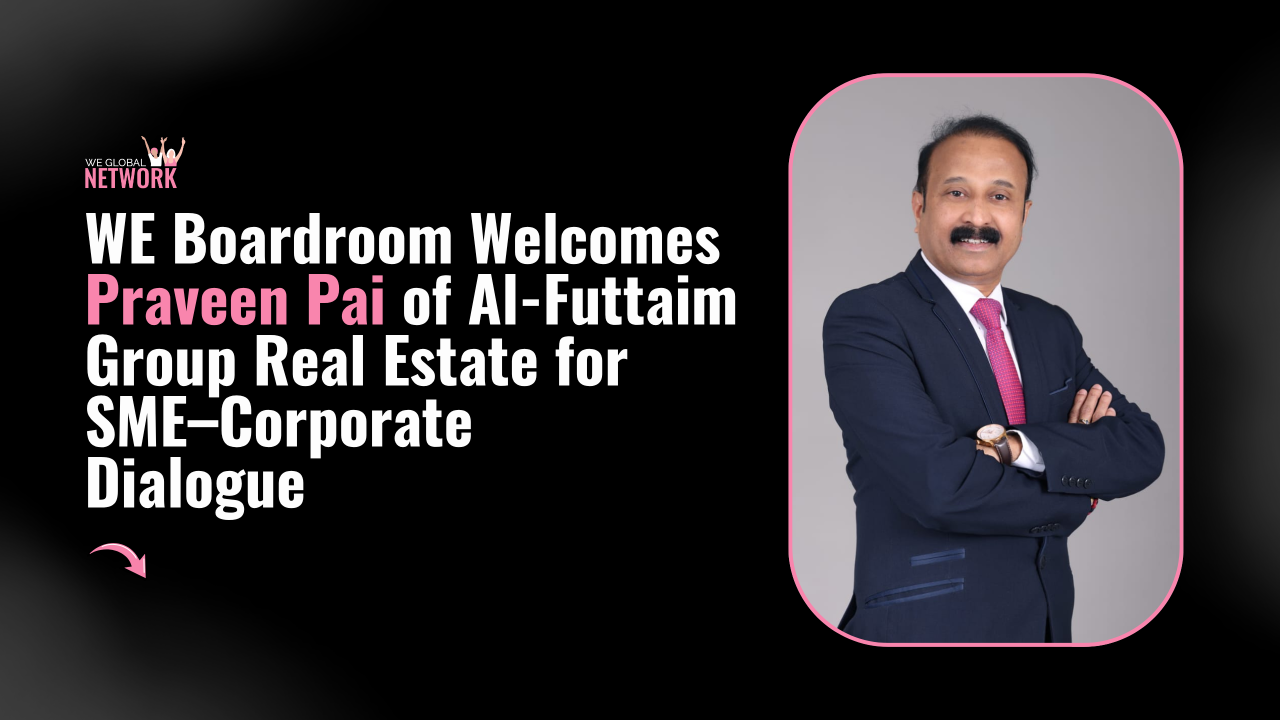
A recent WE Boardroom session with Praveen Pai brought SME owners into a focused conversation around his professional journey, leadership, team management and how smaller businesses can better understand and approach the corporate sector. See what happens inside a WE Boardroom session and the kind of conversations founders can expect.
She Builds: Build Relationships Within Your Industry
Sometimes broad networking isn't enough.
Industry context matters.
She Builds creates a more focused space for women working within construction, real estate and related sectors to build relationships, exchange experiences and discuss challenges relevant to their industries.
When people in the room already understand your sector, conversations can become more specific.
A relationship may develop into:
- A referral
- A subcontracting opportunity
- A supplier relationship
- A collaboration
- An introduction
- Shared industry knowledge
This is where sector-specific networking becomes particularly valuable.
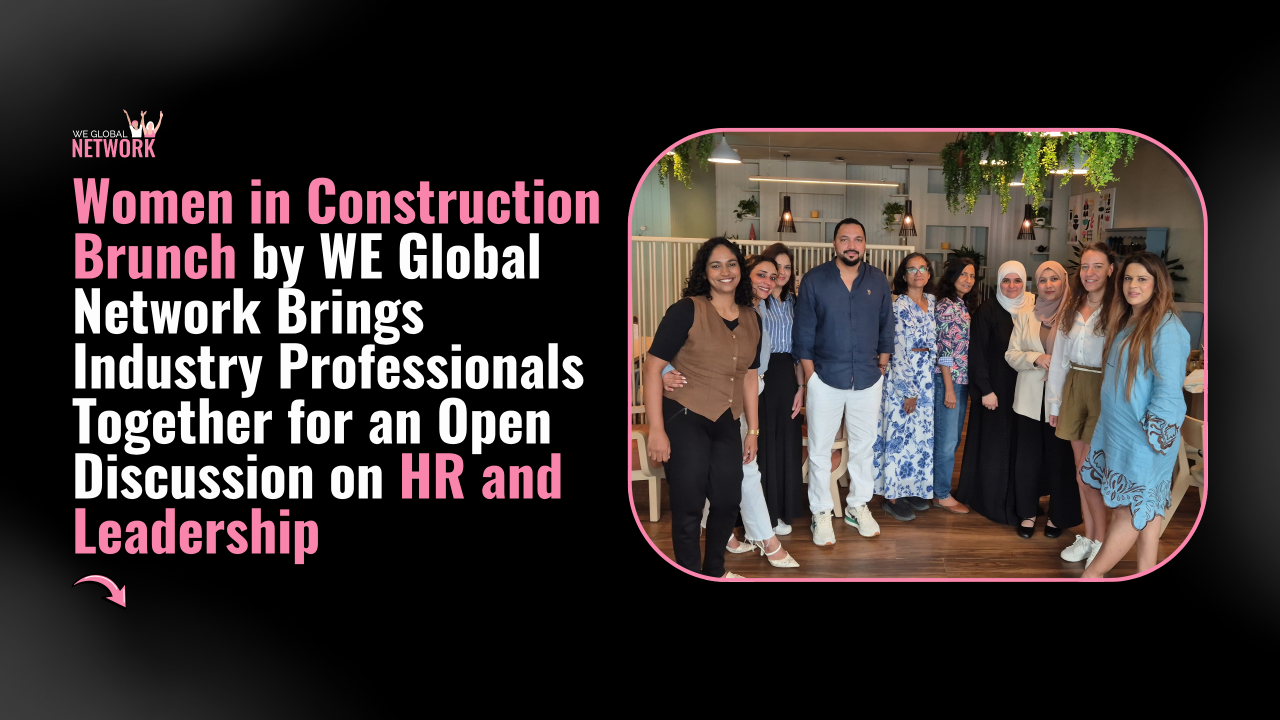
At a recent She Builds Brunch in Dubai, women from construction and related industries came together for conversations around hiring and retention, women in leadership, industry challenges and business relationships. Take a look inside our recent She Builds gathering to see how these smaller, sector-focused conversations work in practice.
The Goal Isn't to Attend More Events
This is the most important takeaway.
You don't necessarily need to attend more networking events.
You need to become better at using the right ones.
Before choosing your next event, ask:
What type of relationship does my business need right now?
Broad business connections?
Corporate insight?
Industry-specific relationships?
Referral partners?
Collaborators?
Potential customers?
Then choose the room accordingly.
Your Next Opportunity May Be One Introduction Away
Business networking isn't about collecting the largest number of contacts.
It's about building enough trust that someone remembers you when the right conversation happens.
You may meet your next client directly.
Or you may meet the person who eventually introduces you to them.
Both are valuable.
At WE Global Network, our aim is to create different spaces for different kinds of meaningful business conversations — from wider networking through WE Connect Dubai, to curated conversations through WE Boardroom, and sector-focused relationships through She Builds.
If you're looking to build stronger business relationships in the UAE, explore our upcoming events and choose the environment that aligns with what your business needs next.
Because your next opportunity may not come from the 100 business cards you collect.
It may come from the one relationship you actually build.
Join WE Global Network
WE Global Network is a premium, women-only business community for established and scaling entrepreneurs, founders and CEOs. Through curated networking events, international delegations and strategic collaborations, we connect you with the people, opportunities and insights to grow across markets. If you’re leading a serious, growth-focused business and want to be in a room of women who think as big as you do, this is your circle.