The Best Business Opportunities at Networking Events Aren’t Always Clients
Oct 03, 2026You walk into a networking event with one objective:
Find clients.
You speak to 20 people.
Nobody seems to need your service right now.
So you leave thinking:
“That wasn't a very useful event.”
But was it really?
What if one of those people works with exactly the type of companies you're trying to reach?
What if another could introduce you to a corporate decision-maker?
What if someone else could become a strategic partner who brings you opportunities for the next five years?
And what if the founder you casually spoke to over coffee knows exactly how to solve a problem you've been struggling with for months?
One of the biggest mistakes entrepreneurs make at networking events is evaluating every person through a single question:
“Can this person become my client?”
Business relationships don't work that way.
For UAE founders and SME owners, some of the most valuable people in your network may never buy anything from you.
Instead, they may open a door.
Make an introduction.
Recommend you.
Collaborate with you.
Share information.
Connect you to an opportunity.
Or simply help you make a better business decision.
Here are seven types of connections worth looking for at your next business networking event.
1. The Referral Partner
Let's say you're an interior designer specialising in commercial offices.
At a networking event, you meet a business setup consultant.
They don't need an interior designer.
So at first glance, there is no business opportunity.
But think about who they meet every week.
Entrepreneurs setting up companies.
Companies expanding.
Businesses moving into offices.
Foreign businesses establishing operations in the UAE.
Some of those businesses may eventually need an office designed or fitted out.
Suddenly, the business setup consultant becomes a much more interesting connection.
Not because they will buy from you.
Because they operate one step before your customer needs you.
Who could be your referral partners?
Ask:
Which businesses already serve my ideal customers but don't compete with me?
For example:
If you're a marketing agency:
Potential referral partners could include:
-
Business setup consultants
-
Website developers
-
PR agencies
-
Business coaches
-
CRM consultants
-
Photographers
-
Corporate consultants
If you're an HR consultant:
Think about:
-
Business setup companies
-
Accountants
-
Payroll providers
-
Corporate lawyers
-
Recruitment companies
-
Employee wellness providers
-
Insurance advisers
If you're an interior designer:
Consider:
-
Commercial real-estate brokers
-
Fit-out contractors
-
Office furniture suppliers
-
Business setup consultants
-
Architects
-
Signage companies
The best referral relationships often exist between businesses that serve the same customer at different stages.
2. The Corporate Connector
Suppose your ideal customer is a large UAE company.
You would love to speak with:
The Procurement Manager.
HR Director.
Marketing Director.
Facilities Manager.
Operations Head.
But you don't know them.
At an event, you meet someone who does.
That person may not be your customer.
But they could potentially become the bridge between your SME and the organisation you're trying to reach.
This is particularly important in B2B.
Cold emails and LinkedIn messages have their place.
But a warm introduction from someone trusted by both sides can create a very different starting point.
Don't immediately ask for an introduction
This is important.
Meeting someone once doesn't give you the right to say:
“Can you introduce me to your Procurement Director?”
Relationships need context.
First, make sure the person understands:
-
What your company does
-
Who you serve
-
Why you're credible
-
What kind of organisation you want to work with
-
What specific problem you solve
Then, when an appropriate opportunity arises, an introduction makes sense.
You want someone to think:
“I know a company that would be perfect for this.”
Not:
“I met this person once and now they want access to everyone I know.”
3. The Strategic Partner
Some businesses become stronger when combined.
Imagine a corporate events company meets:
-
A photographer
-
A gifting company
-
An AV supplier
-
A venue
-
A branding company
Individually, each sells a separate service.
Together, they could potentially offer a more complete solution.
Or imagine an HR consultant meets a leadership coach.
One handles HR systems.
The other handles leadership development.
Neither needs to compete.
Instead, they may eventually collaborate on corporate projects.
Look for complementary businesses
Ask:
What does my customer usually need immediately before, during or after buying from me?
That's where strategic partnerships often sit.
For example:
Real estate broker + interior designer
The client gets a property and then needs to design it.
Business setup consultant + accountant
The company gets established and then needs financial systems.
Wedding planner + jewellery designer
The customer journey overlaps.
Marketing agency + videographer
Clients frequently need both.
Construction consultant + specialist contractor
One opportunity may create another.
The strongest partnerships aren't random.
They make sense because the customers overlap.
4. The Supplier Who Can Help You Grow
Networking isn't only about finding people who will give you revenue.
Sometimes the most valuable person in the room can help you deliver better.
Suppose you're a corporate gifting company.
You meet a packaging supplier who can:
-
Reduce your lead time
-
Improve your presentation
-
Handle larger volumes
-
Offer customisation
-
Solve a recurring delivery problem
That relationship may increase your margins or allow you to accept projects you previously couldn't handle
Or perhaps you're an events company and meet a reliable AV supplier.
Or a restaurant owner meets a better food distributor.
Or an e-commerce founder meets a logistics provider.
None of these people are clients.
But they can directly affect your profitability and ability to scale.
Founders often focus heavily on sales networks
But serious businesses also need strong:
Supplier networks.
Operational networks.
Professional networks.
Your ability to deliver matters just as much as your ability to sell.
5. The Industry Insider
Sometimes the most valuable thing you get from networking isn't a lead.
It's information.
Imagine speaking with someone who has spent 15 years in the industry you're trying to enter.
In one conversation, they tell you:
“Companies in this sector rarely buy directly. You need to register through their vendor portal first.”
Or:
“Your pricing isn't actually the problem. Most buyers expect this certification before they'll consider you.”
Or:
“Don't approach the Marketing Director. This decision usually sits with Procurement.”
That information could save you months of wasted effort.
Experienced people understand things Google doesn't always tell you
They know:
-
How buying decisions actually happen
-
Which companies are expanding
-
What customers are complaining about
-
Where margins are becoming difficult
-
Which regulations are affecting the sector
-
What procurement teams expect
-
Which mistakes newcomers repeatedly make
This is why founders shouldn't only network with potential customers.
Sometimes you should simply meet people who understand your market better than you do.
Ask questions.
Listen.
You don't always need to pitch.
6. The Collaboration Partner
Not every opportunity needs to be a client-supplier relationship.
Sometimes two businesses can create something together.
For example:
A nutritionist and a fitness studio could run a workshop.
A business consultant and an accountant could host a financial-planning session for SMEs.
A jewellery brand and fashion designer could create a joint pop-up.
A real-estate company and interior designer could create educational content for new homeowners.
A leadership coach and HR consultant could run a corporate workshop.
Collaboration can give both businesses access to:
-
New audiences
-
New customers
-
Shared marketing
-
Events
-
Content
-
Expertise
-
Credibility
-
Distribution
Don't collaborate just because you like someone
A collaboration should have a clear business reason.
Ask:
Do we serve similar audiences?
Do our services complement each other?
Does each side bring something valuable?
Is the objective clear?
How will both businesses benefit?
Good collaborations expand reach.
Bad collaborations create meetings.
Know the difference.
7. The Peer Founder
This may be the most underestimated relationship on this list.
Another founder may never:
Buy from you.
Refer a customer.
Introduce you to a corporate.
Collaborate with you.
And still become one of the most valuable people in your business network.
Why?
Because they understand what you're dealing with.
They may have already:
-
Hired the role you're trying to hire
-
Changed the software you're considering
-
Experienced a cash-flow problem you're facing
-
Entered a market you're exploring
-
Dealt with a difficult supplier situation
-
Built a team
-
Lost a major client
-
Negotiated corporate payment terms
-
Made an expensive mistake you're about to make
Founder-to-founder conversations can provide something very different from formal business advice:
Context.
Sometimes you don't need someone to tell you what the textbook says.
You need someone to say:
“We dealt with exactly this six months ago. Here's what happened.”
That can be enormously useful.
So Who Should You Actually Be Looking for at Your Next Event?
Before attending another networking event, create a simple list.
Not a list of names.
A list of roles.
For example:
My Business Needs:
2 potential referral partners
1 person connected to my target corporate sector
1 complementary business
1 potential supplier
1 experienced industry contact
1 founder operating at a similar stage
Now you've completely changed how you approach the room.
Instead of asking:
“Who can I sell to?”
you're asking:
“Who should be part of the ecosystem around my business?”
That is a much more strategic question.
Build Your Business Ecosystem, Not Just Your Contact List
Imagine a founder has 3,000 LinkedIn connections.
Another has only 200 relevant business relationships.
But within those 200 are:
-
Accountants
-
Lawyers
-
Bankers
-
Corporate decision-makers
-
Suppliers
-
Referral partners
-
Industry specialists
-
Experienced founders
-
Potential collaborators
-
Customers
Who has the stronger network?
The number isn't the point.
Relevance is.
Your business network should function like an ecosystem.
Some people bring opportunities.
Some bring information.
Some bring expertise.
Some make introductions.
Some help you deliver.
Some challenge your thinking.
And some become customers.
One Connection Can Play More Than One Role
Don't categorise people too rigidly either.
Today's supplier could become tomorrow's referral partner.
A peer founder could eventually become a customer.
A client could introduce you to a strategic partner.
A collaborator could eventually bring you a corporate opportunity.
Business relationships evolve.
That's another reason aggressive selling at the first meeting can be counterproductive.
You don't yet know where the relationship may lead.
How Do You Know Whether a Networking Event Was Worth Attending?
Don't judge it before you've followed up.
And don't judge it only by sales.
After an event, ask:
Did I meet anyone relevant to my ideal customers?
Did I identify potential referral partners?
Did I learn anything useful about my market?
Did I find a supplier or service provider worth exploring?
Did I meet someone who could become a strategic partner?
Did any collaboration ideas emerge?
Did I meet founders worth staying connected with?
Did I receive or make any useful introductions?
Are there conversations worth continuing?
If the answer to several of these is yes, the event may have been much more valuable than it initially appeared.
But Relationships Still Need Follow-Up
Finding the right people in the room isn't enough.
If you meet a potential referral partner, don't simply connect on LinkedIn and disappear.
Continue the conversation.
If you promised an introduction, make it.
If someone recommended a resource, follow up.
If you discussed collaborating, schedule the next conversation.
If someone shared useful advice, thank them.
If there's no immediate reason to meet again, stay appropriately connected.
Business relationships compound through repeated interaction.
Different Connections Need Different Rooms
Not every networking environment is designed to produce the same relationships.
Sometimes you need a broad room where you can discover people across industries.
Sometimes you need access to more focused business and corporate conversations.
Sometimes industry relevance matters more than the size of the room.
Understanding this can help founders become much more selective about where they spend their time.
At WE Global Network, this is also why our core event formats are designed around different types of business interaction.
WE Connect Dubai: Build the Wider Ecosystem Around Your Business
WE Connect Dubai creates space for broader business networking across industries.
For founders, this can be useful for discovering:
-
Referral partners
-
Potential clients
-
Suppliers
-
Collaborators
-
Service providers
-
Fellow entrepreneurs
-
New business relationships
You may enter the room thinking you need a customer and leave having met someone who can introduce you to ten.
That's the value of a wider business ecosystem.
WE Boardroom: Get Closer to Corporate Thinking
For SMEs looking to understand and eventually work more effectively with larger organisations, the relationships and knowledge required can be different.
WE Boardroom brings a smaller group of entrepreneurs into more focused conversations with experienced corporate and business leaders.
These sessions allow founders to ask questions around areas such as:
-
Corporate procurement
-
Leadership
-
Team management
-
Business growth
-
SME-corporate relationships
-
How larger organisations evaluate suppliers
-
Career and business experience
The objective isn't simply to enter a room and pitch a corporate leader.
It's to better understand how the other side of the table thinks.
At a recent WE Boardroom session with Praveen Pai, SME owners discussed his professional journey, leadership, team management and how smaller businesses can better understand and approach the corporate sector.
See what happens inside a WE Boardroom session and the kind of conversations founders can expect.
She Builds: Build Relationships Inside Your Industry
There are times when meeting people from many industries is valuable.
And there are times when you need a room where people already understand your industry.
She Builds creates an industry-focused environment for women working within construction, real estate and related sectors.
This can help create more relevant conversations around:
-
Industry challenges
-
Leadership
-
Suppliers
-
Projects
-
Collaborations
-
Referrals
-
Business opportunities
-
Professional experiences
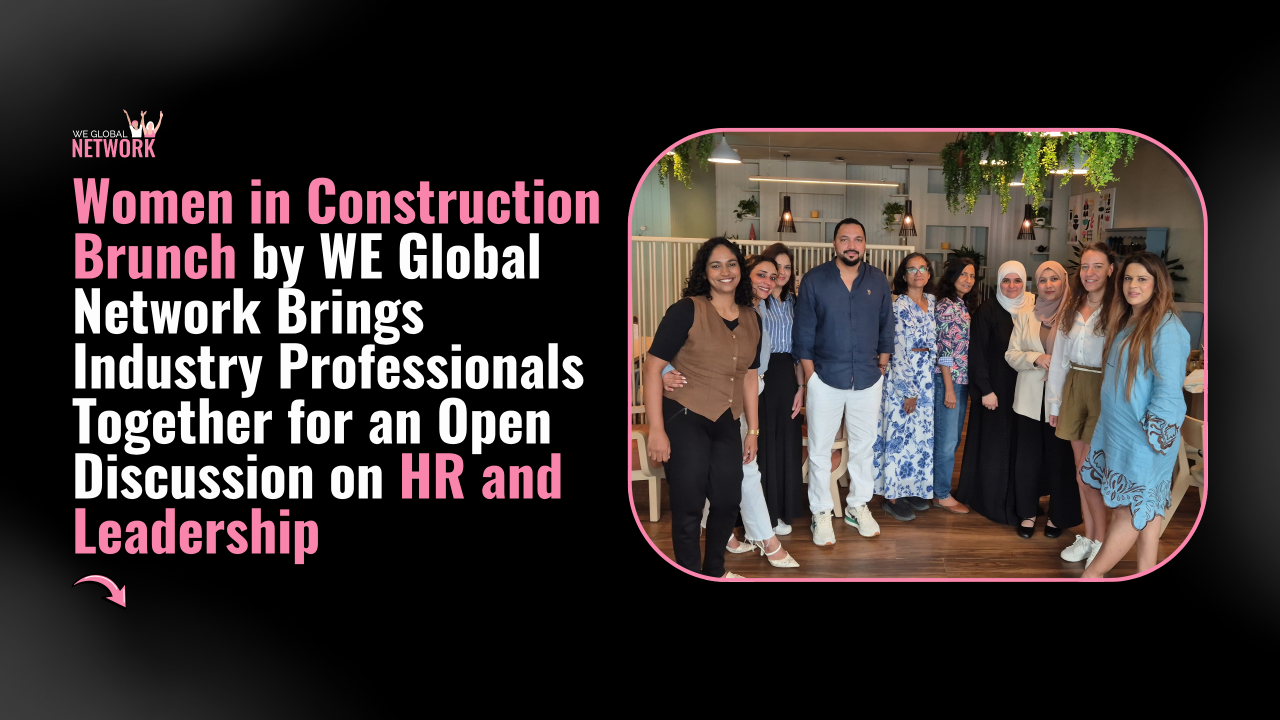
At a recent She Builds Brunch in Dubai, women from construction and related industries came together for focused conversations around business, leadership, industry challenges and professional relationships.
Take a look inside our recent She Builds gathering to see how sector-focused networking can create a different kind of conversation.
Stop Asking: “How Many Clients Did I Get?”
After your next networking event, try asking seven different questions:
Did I meet a referral partner?
Did I meet a corporate connector?
Did I meet a strategic partner?
Did I find a supplier who could improve my business?
Did I learn something from an industry insider?
Did I identify a collaboration opportunity?
Did I meet another founder worth keeping in my circle?
If you did, you may have had an excellent networking event.
Even if you didn't sell anything that day.
Your Network Should Help Your Business Move
A strong business network isn't simply a database.
It should help you:
Find people.
Reach people.
Learn faster.
Solve problems.
Discover opportunities.
Build credibility.
Make introductions.
Get introduced.
Collaborate.
And, eventually, generate business.
At WE Global Network, we create different spaces for these different types of connections — from broader networking through WE Connect Dubai, to curated corporate conversations through WE Boardroom, and sector-focused relationships through She Builds.
If you're looking to strengthen the ecosystem around your business, explore our upcoming events and identify the room that aligns with the connections you need next.
Because sometimes the most valuable person you meet at a networking event isn't your next client.
It's the person who leads you to your next opportunity.
Join WE Global Network
WE Global Network is a premium, women-only business community for established and scaling entrepreneurs, founders and CEOs. Through curated networking events, international delegations and strategic collaborations, we connect you with the people, opportunities and insights to grow across markets. If you’re leading a serious, growth-focused business and want to be in a room of women who think as big as you do, this is your circle.